For specific information, click these links to jump past the introduction … toxoplasmosis, allergies, E.coli and cryptosporidium ,
Visiting a farm park is a fun, exciting day out for families; however it is not without risk. Our business takes these risks very seriously and has has controls in place to minimise them … from daily inspections of visitor areas to signage and staff supervision.
This page is to provide information to our visitors about safety on the farm; to help you have a safe day and to provide a reference for you should you have concerns afterwards. Please don’t hesitate to contact us should you have any need for further information.
Our main advice for your time on the farm is contained in these simple rules
- NO food and drink on the farm
- WASH hands after contact with animals or their pens, and again before eating or playing.
- KEEP fingers away from the mouths of all animals; do not feed the horses, donkeys and pigs.
- Should you be moving onto the play barn, please observe the strictest of hygiene rules. Wash your hands, and, if you take off your shoes, wash them again. If you are going to eat, wash them again! Leave your animal feed bucket outside at the entrance.
We provide the following information to all visitors on either our activity card or, to schools, on a leaflet. This explains the main risks to visitors from animal related illnesses and explains the main preventative measures.
Toxoplasmosis:
One of the most common things we get asked about is toxoplasmosis and whether pregnant ladies should visit the farm. The main risk is to farm workers who may have much closer contact with birthing animals; however we believe that to make an informed choice and in order to modify behaviour on their visit, expectant mothers should be fully aware of the following information …
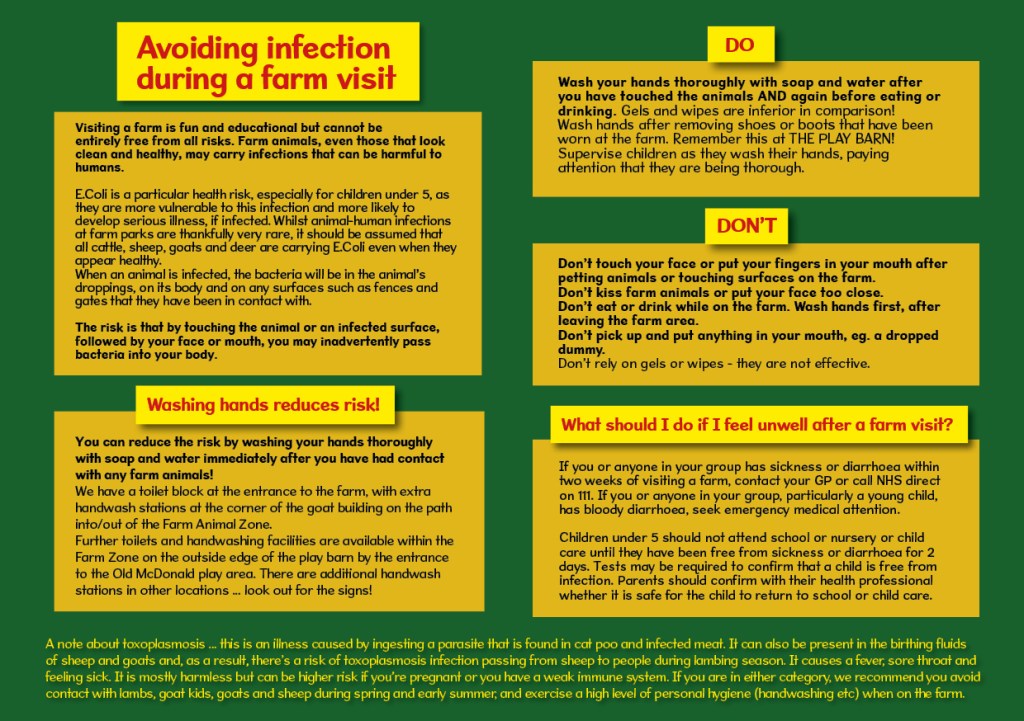
Toxoplasmosis is an illness caused by ingesting a parasite that is found in cat poo and infected meat. It can also be present in the birthing fluids of sheep and goats and, as a result, there’s a risk of toxoplasmosis infection passing from sheep to people during lambing season. It causes a fever, sore throat and feeling sick. It is mostly harmless but can be higher risk if you’re pregnant or you have a weak immune system. If you are in either category, it’s recommended you avoid contact with lambs, goat kids, goats and sheep during spring and early summer, and exercise a high level of personal hygiene (handwashing etc) when on the farm.
Further information about Toxoplasmosis click here
Allergic Reaction to Farm Animals:
We expect that allergy sufferers will already know about their condition and avoid contact with animals that they know will trigger a reaction; however, should you begin to suffer the signs of an allergic reaction or sensitivity then we recommend that you immediately move away from the animals, go to a handwash station and wash your hands and lower arms with hot water and soap and rinse thoroughly. Once you are happy that your hands are clean then repeat the procedure with your face. Long hair can trap allergens so consider tying that back or washing it too. Alert a staff member who can call for first aid attention or emergency services should the condition worsen.
Allergies to farm animals can be caused by exposure to various proteins found in the animal’s hair, skin, saliva, urine, feces, or dander. The most common farm animals that people may be allergic to include cows, pigs, horses, goats, and chickens. Symptoms of an allergy to farm animals can vary from person to person, but they may include: sneezing, runny or stuffy nose, itchy or watery eyes, skin rash or hives, wheezing or difficulty breathing, coughing, chest tightness.
Individuals with asthma may be at an increased risk of experiencing severe symptoms if they are allergic to farm animals.
E.coli and Cryptosporidium:
Farm animals, even those that look clean and healthy, may carry infections that can be harmful to humans.
E.Coli: E.Coli is one health risk caused by a bacteria, especially for children under 5, as they are more vulnerable to this infection and more likely to develop serious illness, if infected. Whilst animal-human infections at farm parks are thankfully very rare, it should be assumed that all cattle, sheep, goats and deer are carrying E.Coli even when they appear healthy. When an animal is infected, the bacteria will be in the animal’s droppings, on its body and on any surfaces such as fences and gates that they have been in contact with. The risk is that by touching the animal or an infected surface, followed by your face or mouth, you may inadvertently pass bacteria into your body.
Cryptosporidium: Cryptosporidium is a parasite that can cause gastrointestinal illness, primarily through ingestion of contaminated water or contact with infected animals or surfaces. When visiting a farm park, there is a small risk of exposure, especially when handling young animals like lambs, calves, or goat kids, which can carry the parasite. To reduce the risk, visitors—particularly young children, pregnant women, and those with weakened immune systems—should avoid eating or drinking in animal areas, wash hands thoroughly with soap and water after touching animals or surfaces, and supervise children closely to ensure good hygiene.
At our Children’s Farm, we do not allow “lamb cuddling” or any handling of the lambs. We understand the risks. We allow bottle feeding participation but this is managed carefully to reduce risk. Unfortunately, some attractions advertise or allow lamb cuddling and this can lead to the outbreaks that get reported on the news when multiple visitors get ill due to handling of a few poorly animals. Any exposure to animals and their waste carries some risk, whether that’s contact with a pet, being out in the park, or a walk in nature. We are very vigilant with our animal management and the way that we allow the public to interact with the animals and we believe we deliver the best standards. We discourage anyone from attending a farm that allows lamb cuddling.
E.coli and Cryptosporidiumis are the main reason we emphasise handwashing at our farm attraction. These bugs enter your body through your mouth, so you reduce the risk significantly by washing your hands thoroughly with soap and water immediately after you have had contact with any farm animals and especially before eating! We also recommend you think about shoes, buggy wheels etc. Don’t wash hands and then put your hands on dirty shoes when taking them off … if you do, then wash hands after!
These are the basic rules you should follow …
Don’t touch your face or put your fingers in your mouth (or nose) after petting animals or touching surfaces on the farm.
Don’t kiss farm animals or put your face too close.
Don’t eat or drink while on the farm. Wash hands first, after leaving the farm area.
Don’t pick up and put anything in your mouth, eg. a dropped dummy.
 The Children's Farm